Submitted by vincentkueck
on Sat, 03/14/2020 - 15:44
The French psychoanalyst Jacques Lacan approaches these questions by exploring an early stage of childhood development, the mirror stage: when toddlers learn to recognize themselves in the mirror, learn to see themselves as an entity, learn to say „I“.
Submitted by vincentkueck
on Sat, 03/14/2020 - 17:30
With the onset of self-perception and with the awareness of our own mirror image, the cosmos gets divided into opposites: subject and object, the self and the other, body and world, the interior and the exterior.
Submitted by vincentkueck
on Sat, 03/14/2020 - 19:58
Perception, experienced directly and intently, fades behind a logic abstraction that takes possession of the object-less world and organizes it in the terms and images of language. The world becomes, thereby, reshaped as a surface - traced, differentiated and fragmented.
Submitted by vincentkueck
on Sat, 03/14/2020 - 22:43
The subject is, according to Lacan, determined by an inner lack, a void, caused through the loss of the first, initial 'objects' that 'detach' as the child grows: a mothers voice, her gaze and breast, their own feces.
Submitted by vincentkueck
on Sat, 03/14/2020 - 16:28
Experiencing this loss marks the beginning of the disintegration of the symbiotic unity of world and I. To Lacan, the mirror stage marks the entry into language, as a compensation for the loss of the 'first objects': it is the birth of the ego.
Submitted by vincentkueck
on Sat, 03/14/2020 - 20:18
The ego erects itself through the self-image in the mirror. It starts to reflect, to abstract - and to talk. Through a process of abstraction, the ego seems to find itself, in a seemingly contradictory fashion. It sees itself as the other that is itself.
Submitted by vincentkueck
on Sat, 03/14/2020 - 21:48
In between the conscious (the world of language) and the unconscious (the inner lack) the ego may be at the border between an inside and an outside - the outline of the subject, taking the role of an intermediate between the nonverbalized unconscious and the outside world.
Submitted by vincentkueck
on Sat, 03/14/2020 - 22:15
What does a world look like now before language? In the time before toddlers have learnt to recognize themselves in a mirror and to discern opposites?
Can a relationship between subject and object be shown on a canvas? Is that even possible outside of the properties of language, which dictate objects with a hard outline to handle?
Submitted by vincentkueck
on Sun, 03/15/2020 - 15:32
Assuming that abstract painting can be a method to channel this original absence of objects, I try to regain sensibility for the depth of immediate perception - and to break open mere superficiality.
Submitted by vincentkueck
on Sat, 03/14/2020 - 23:38
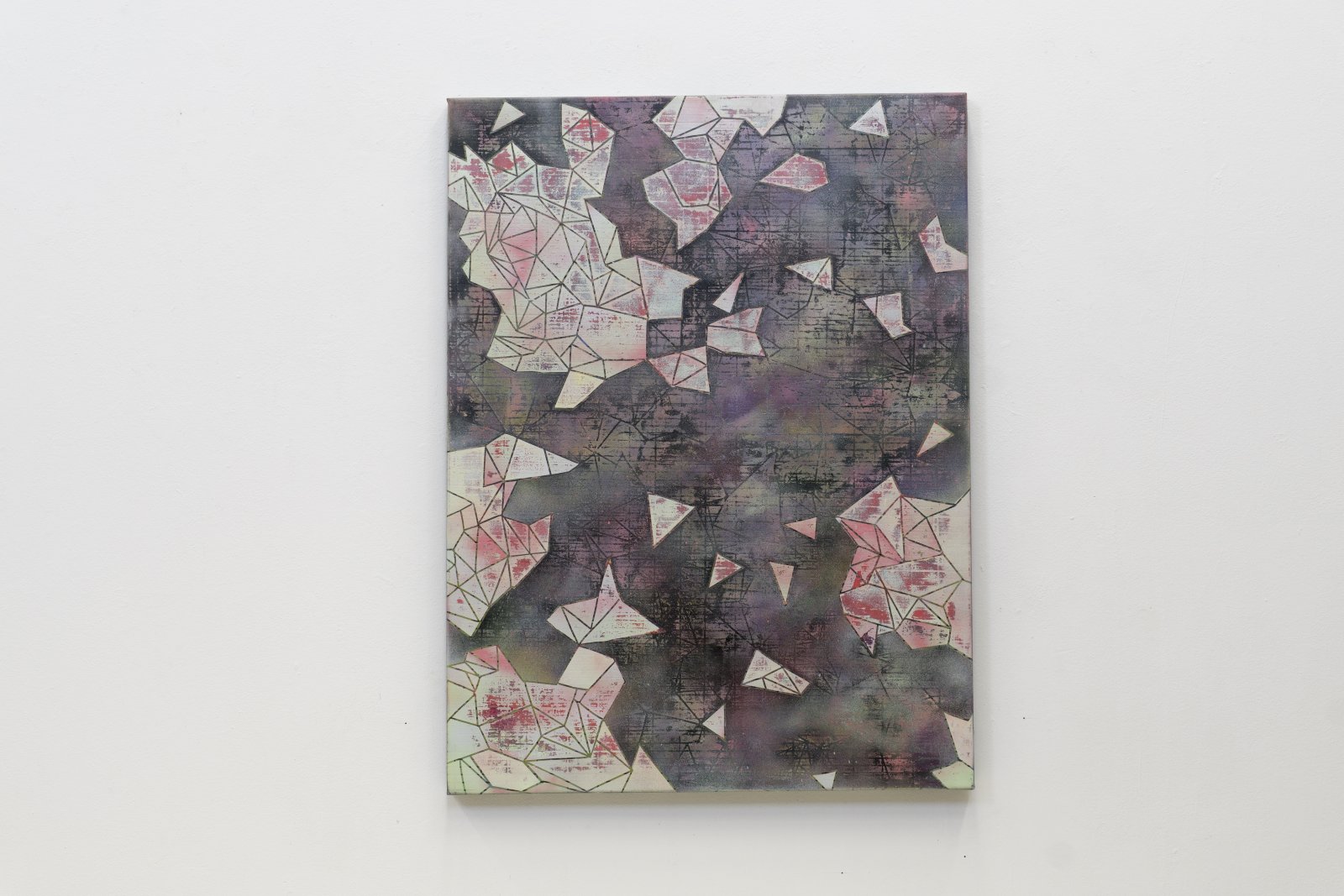
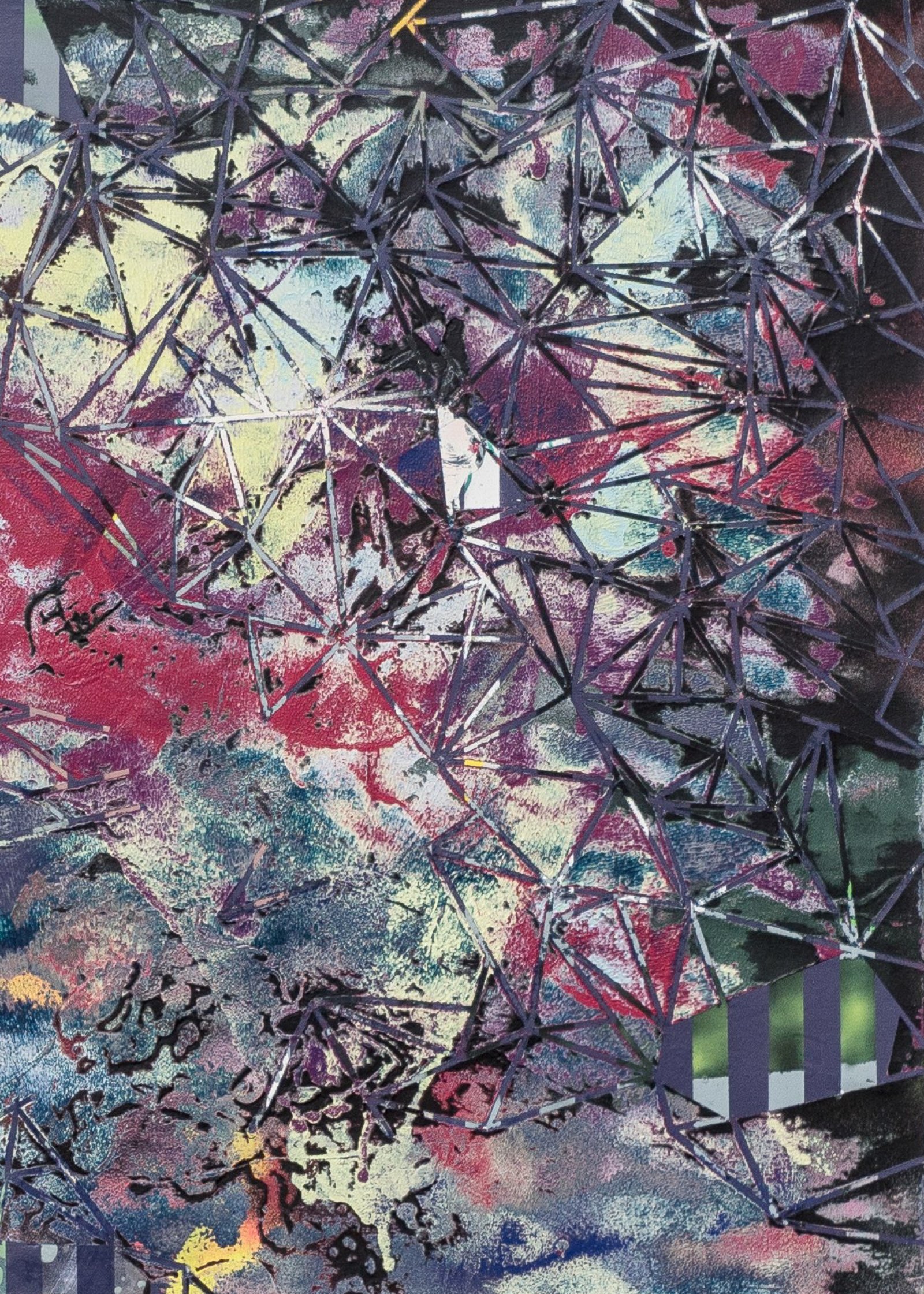
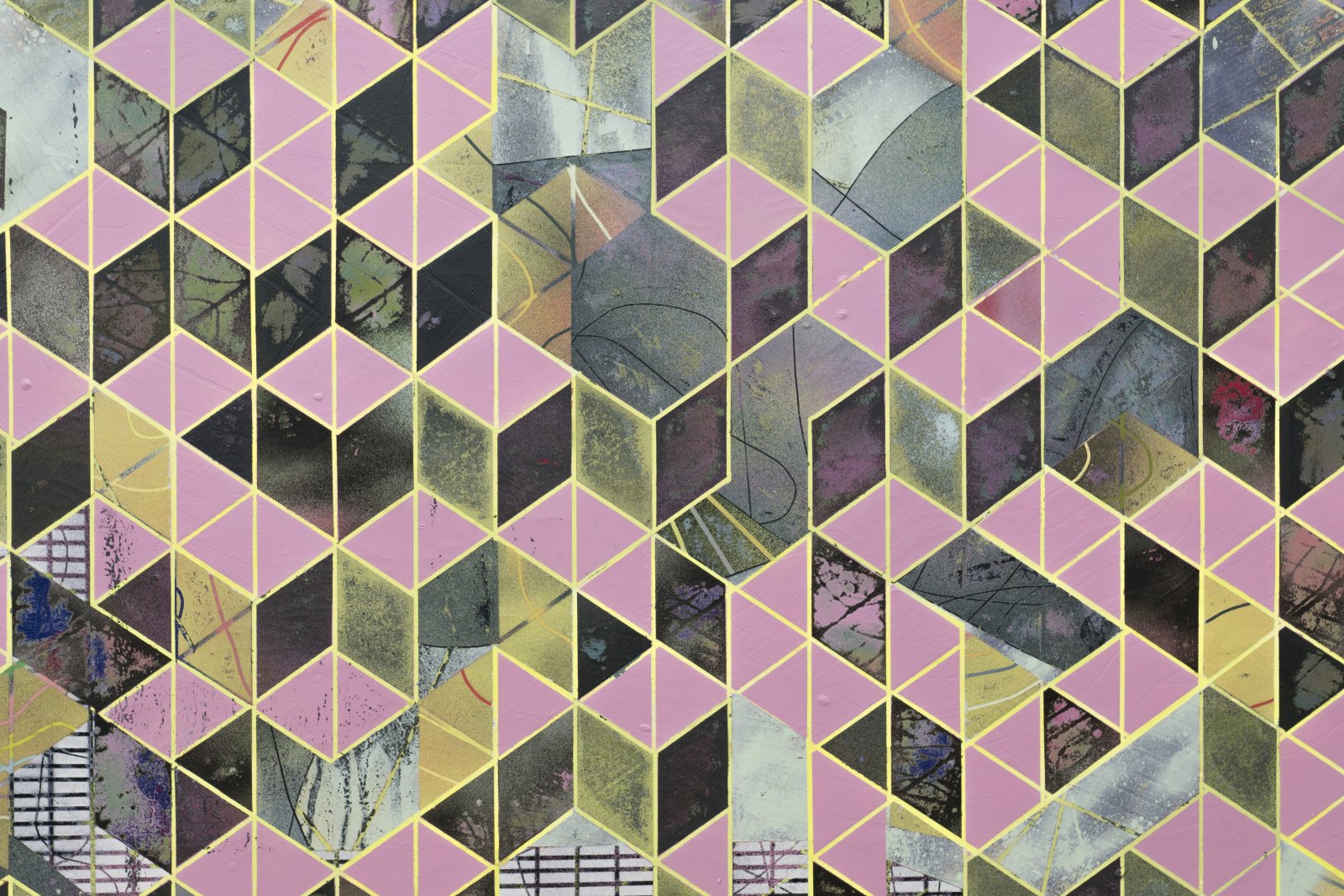
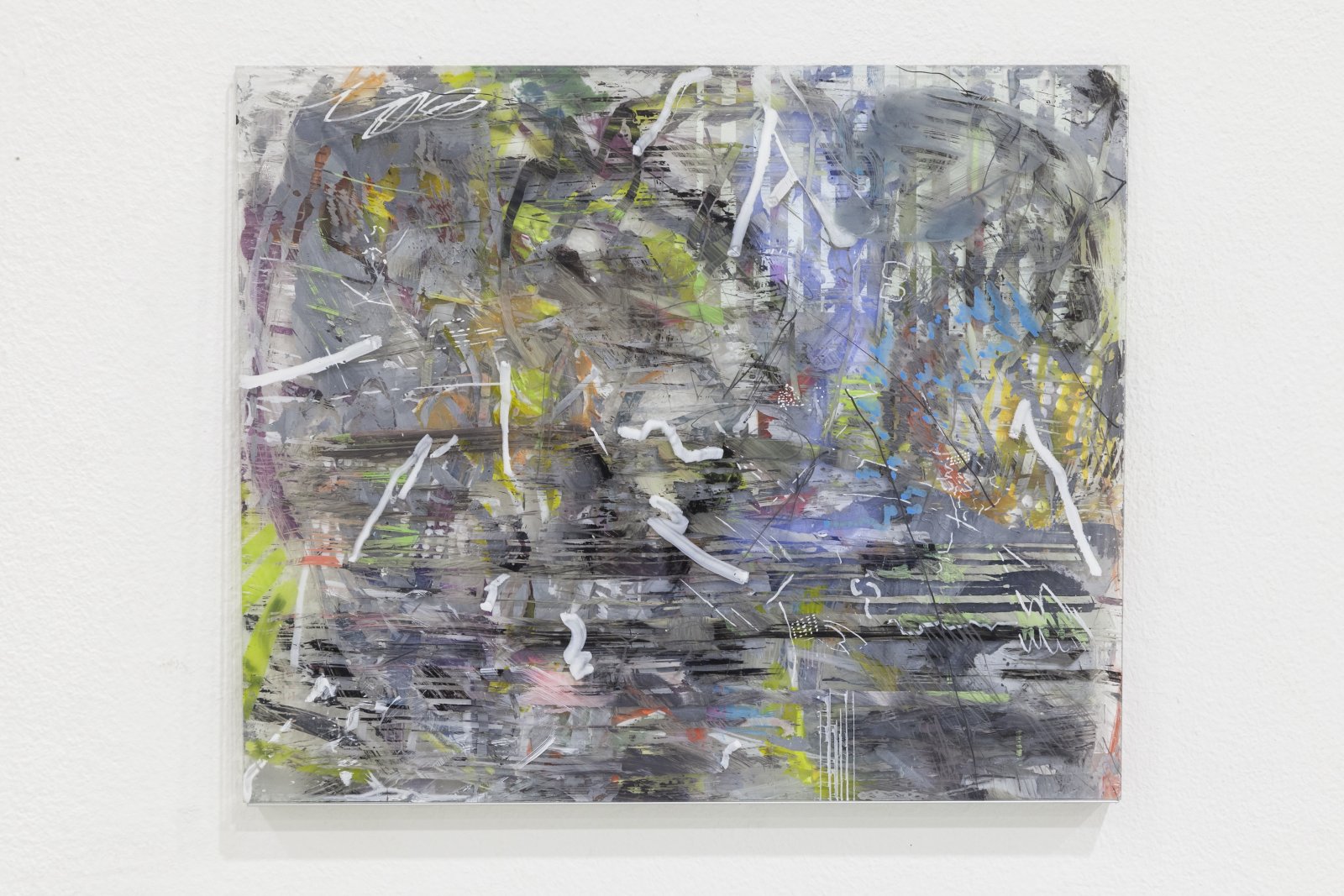
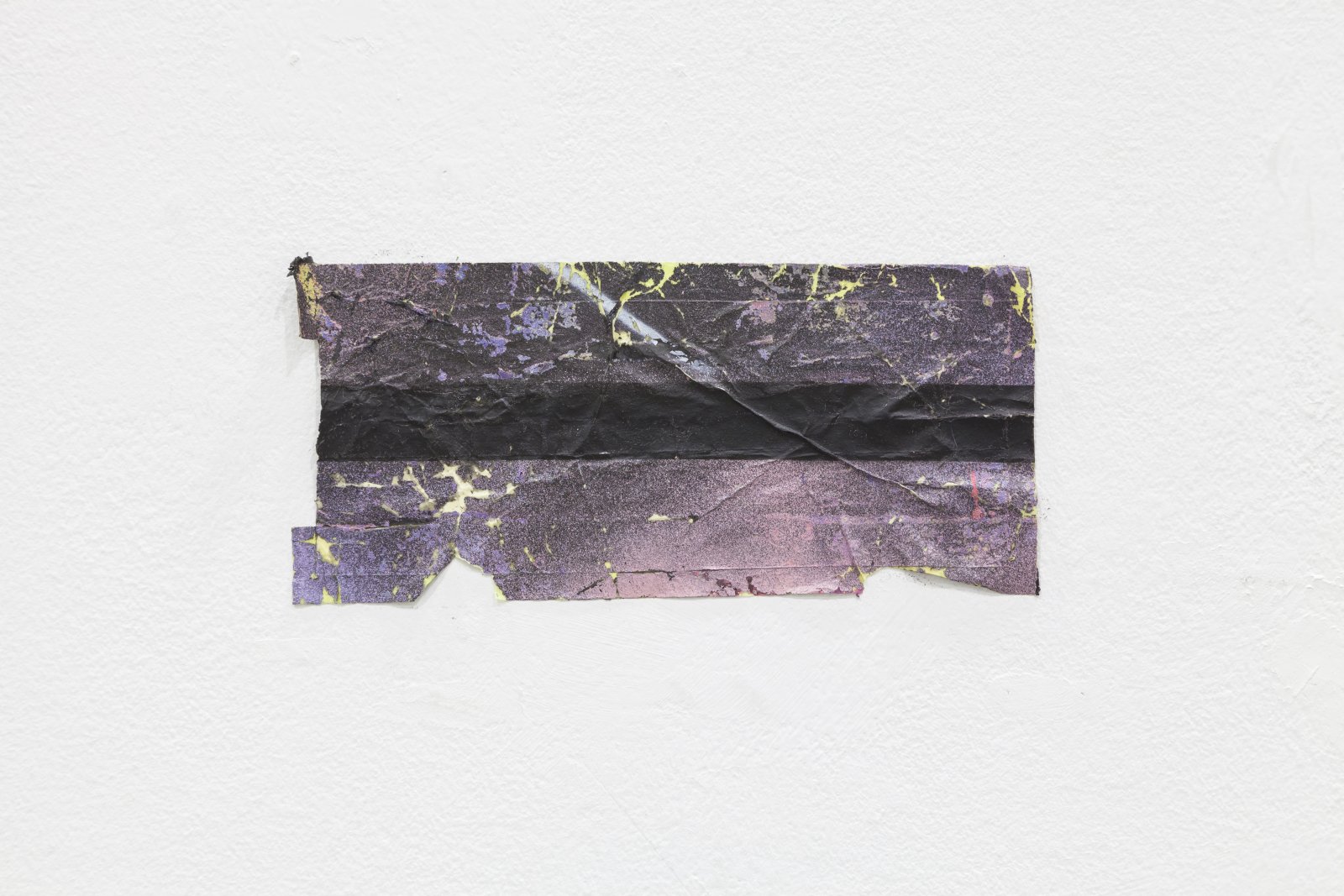
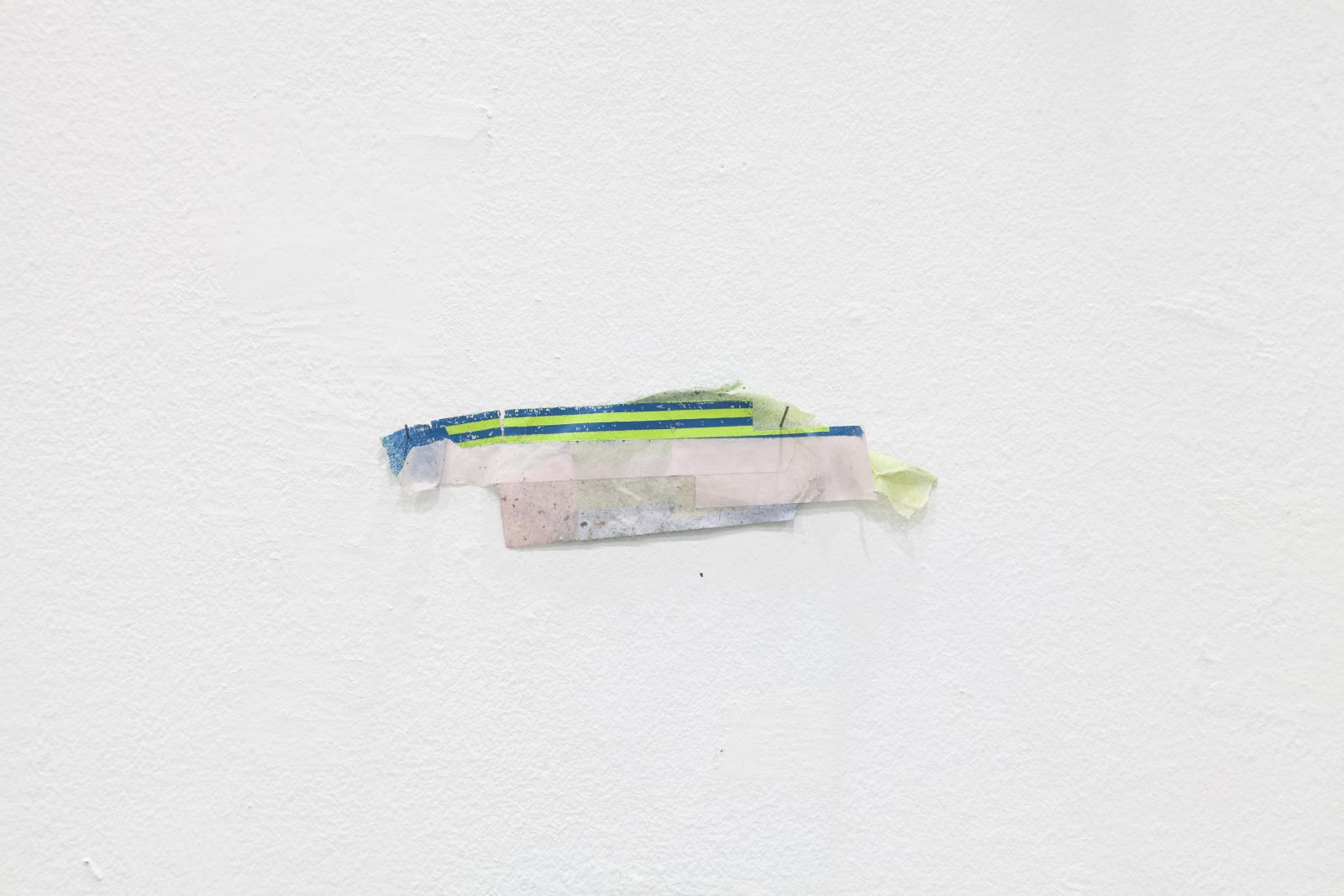
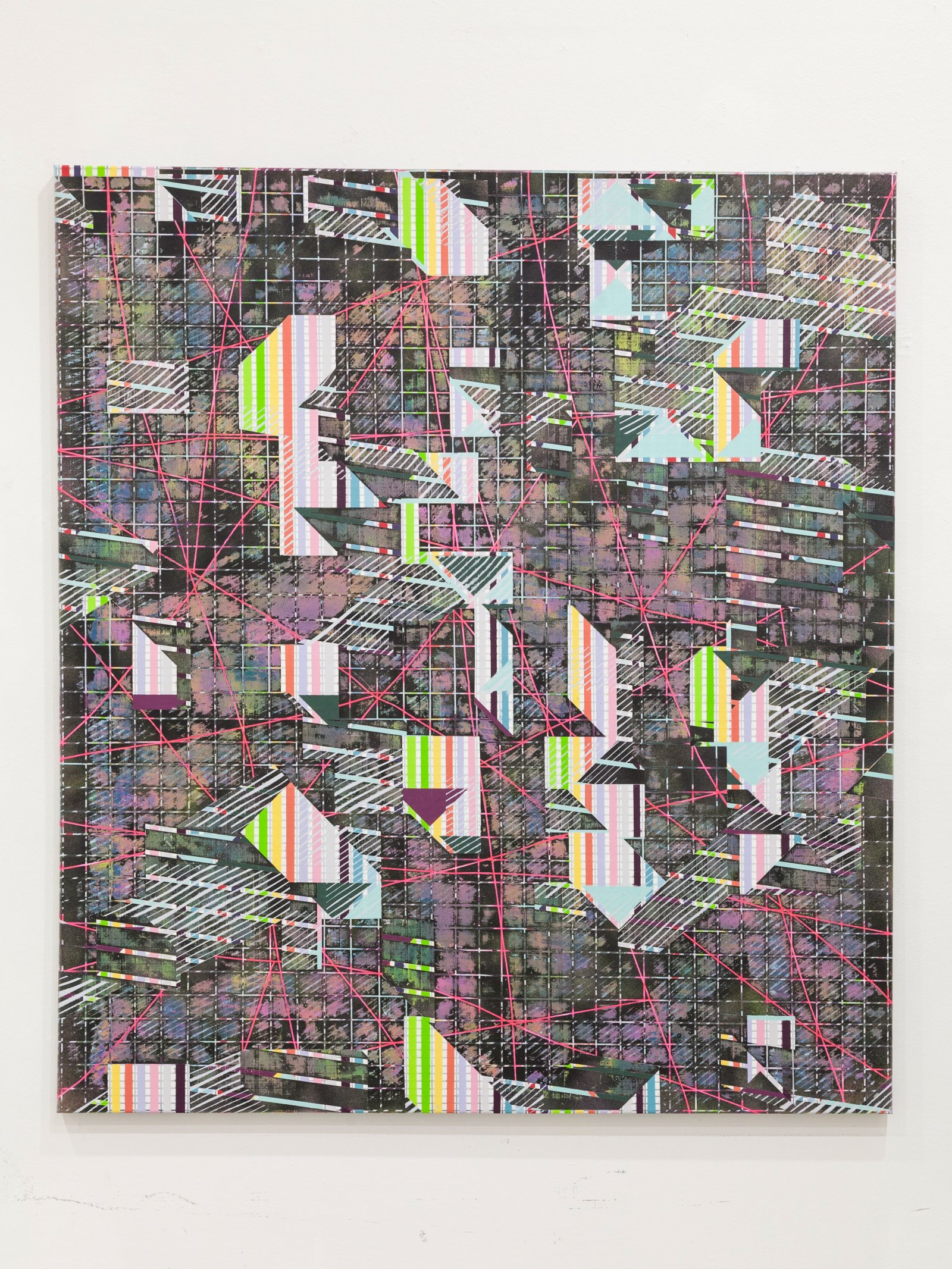
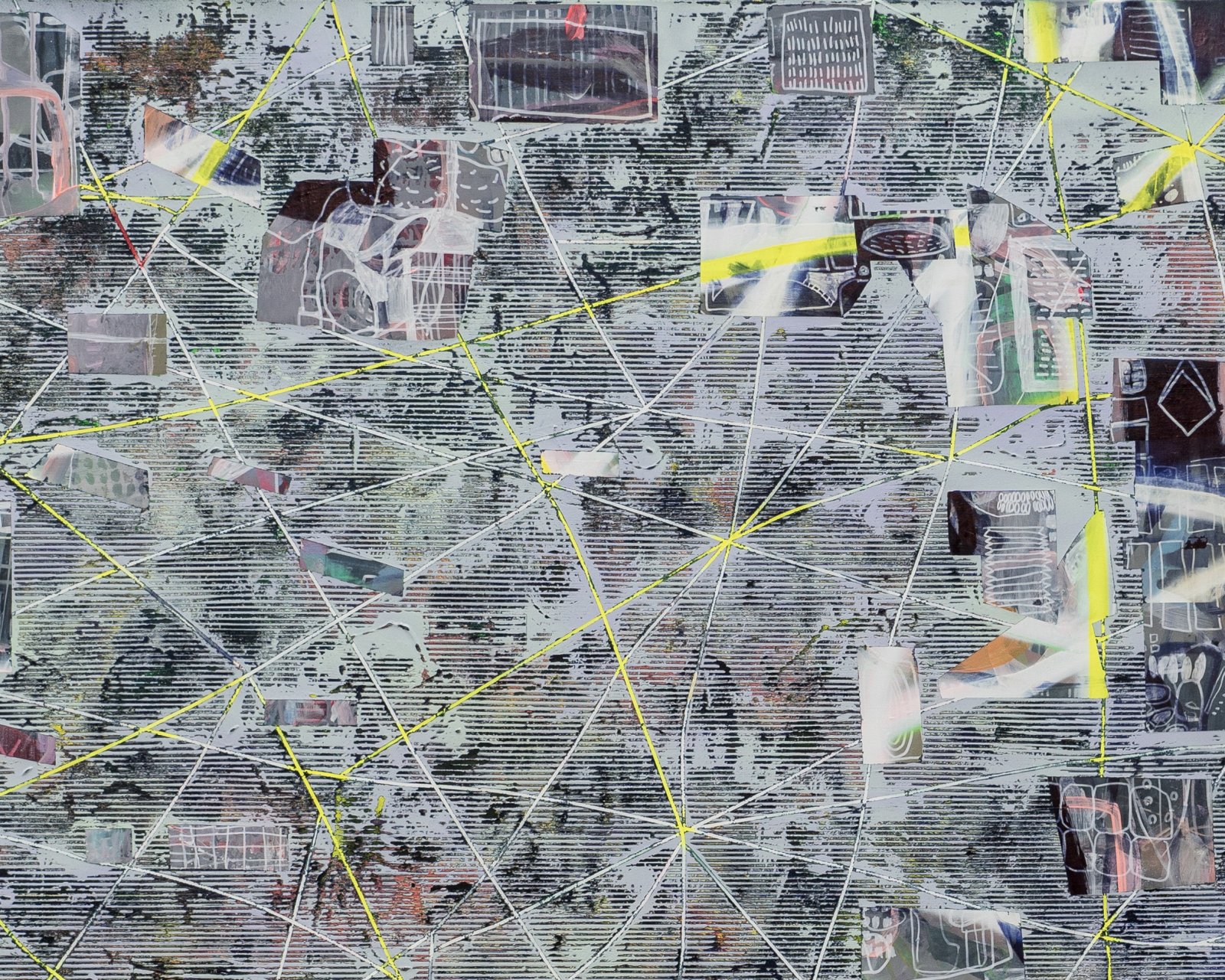
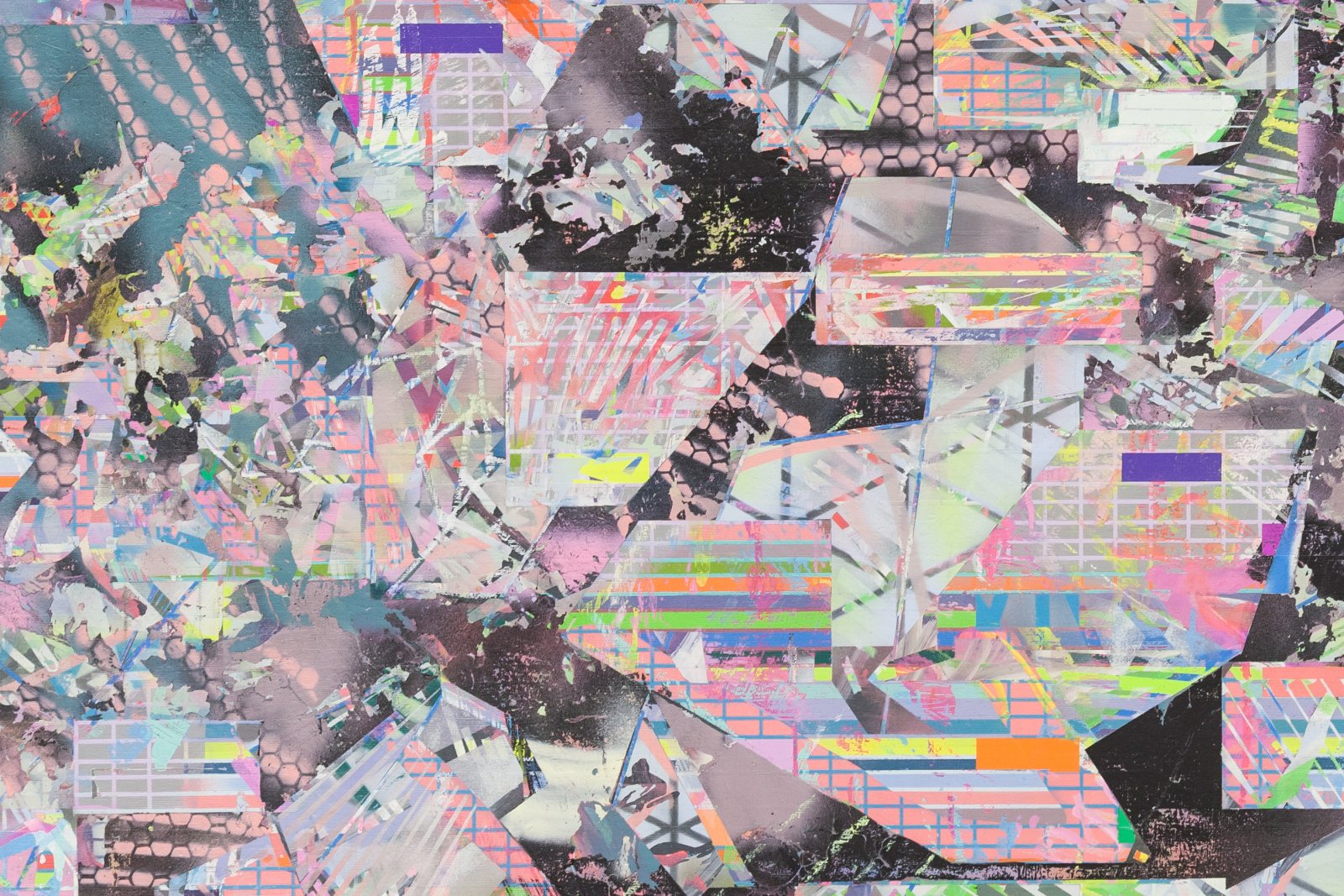
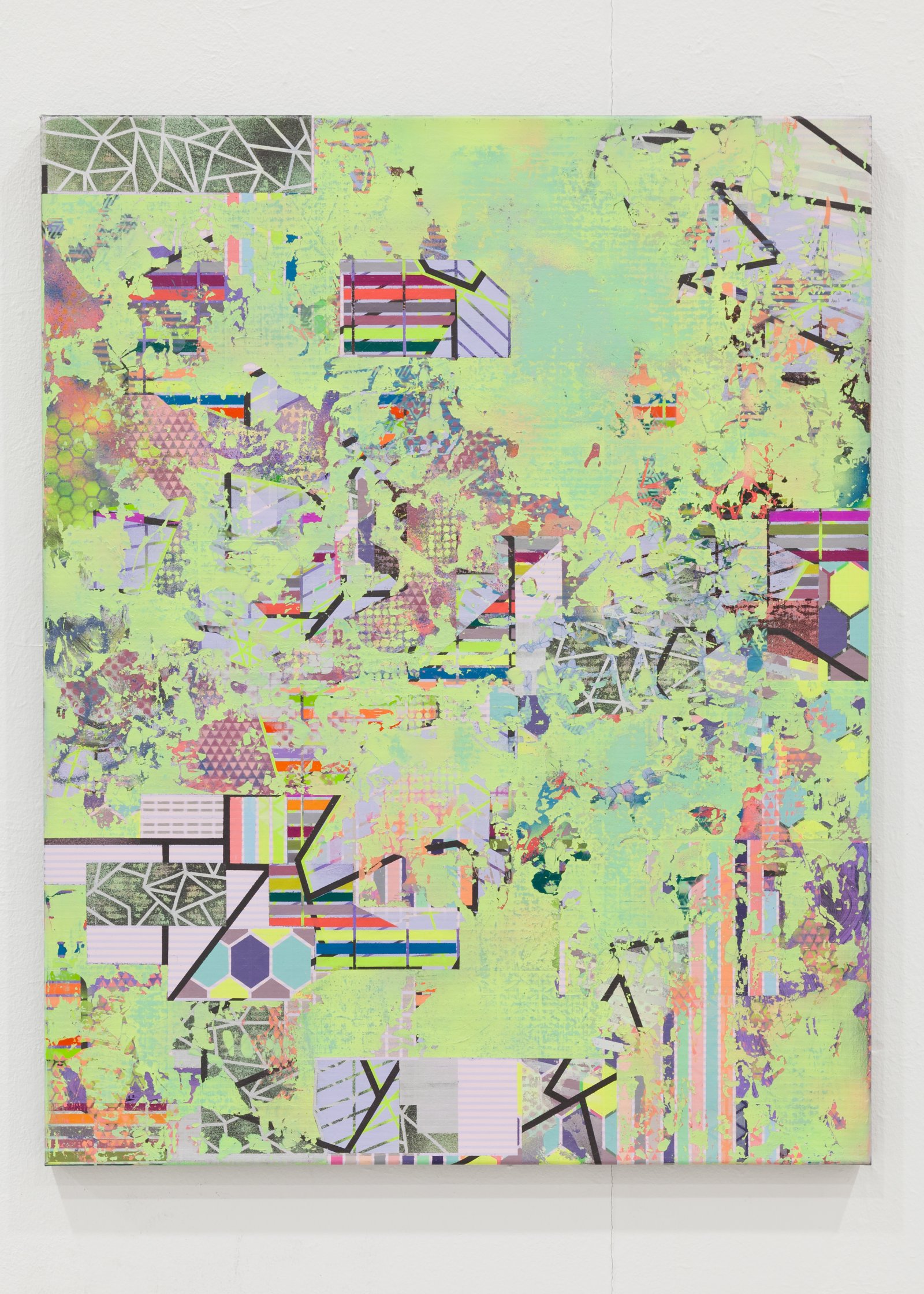
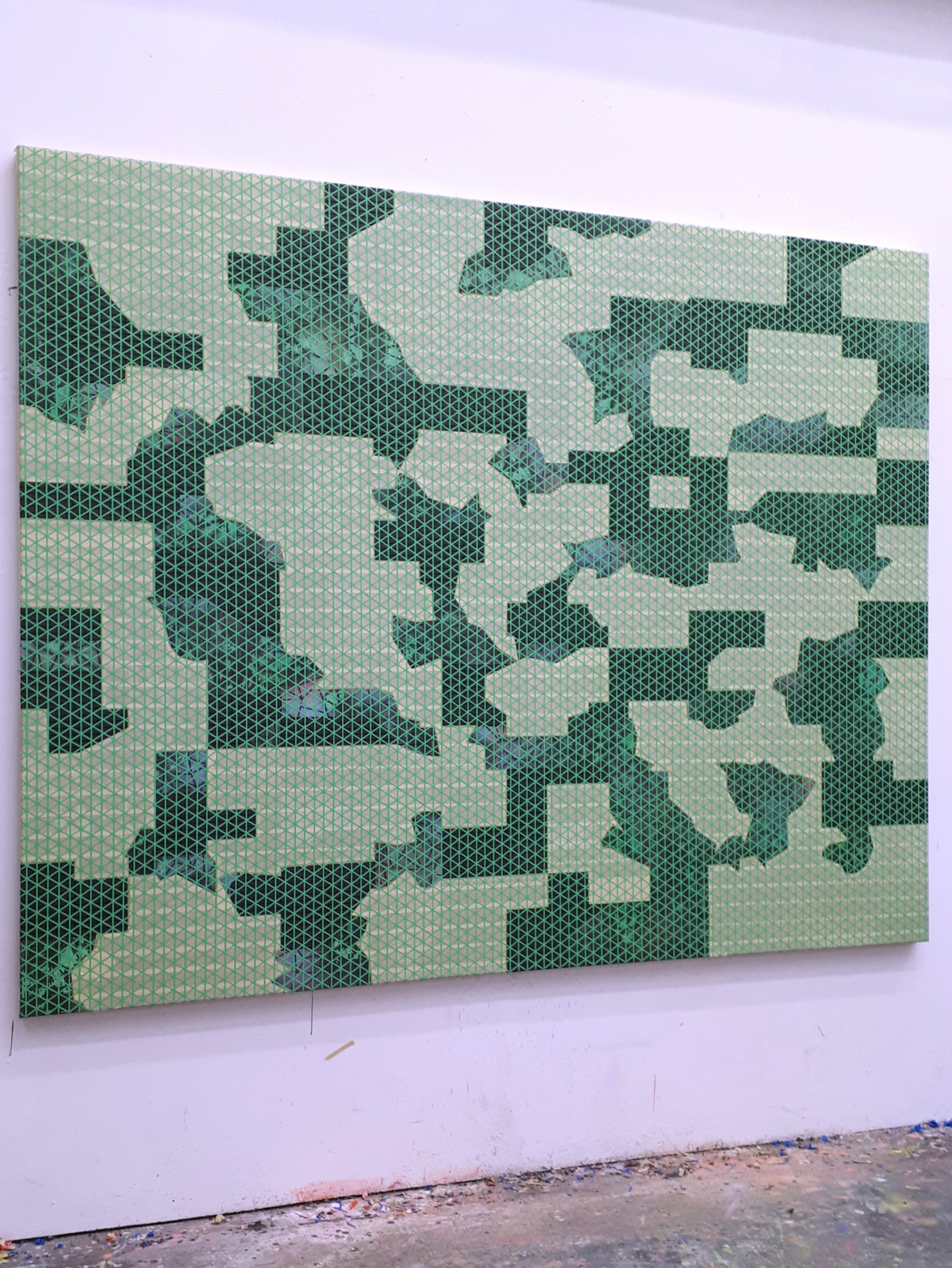
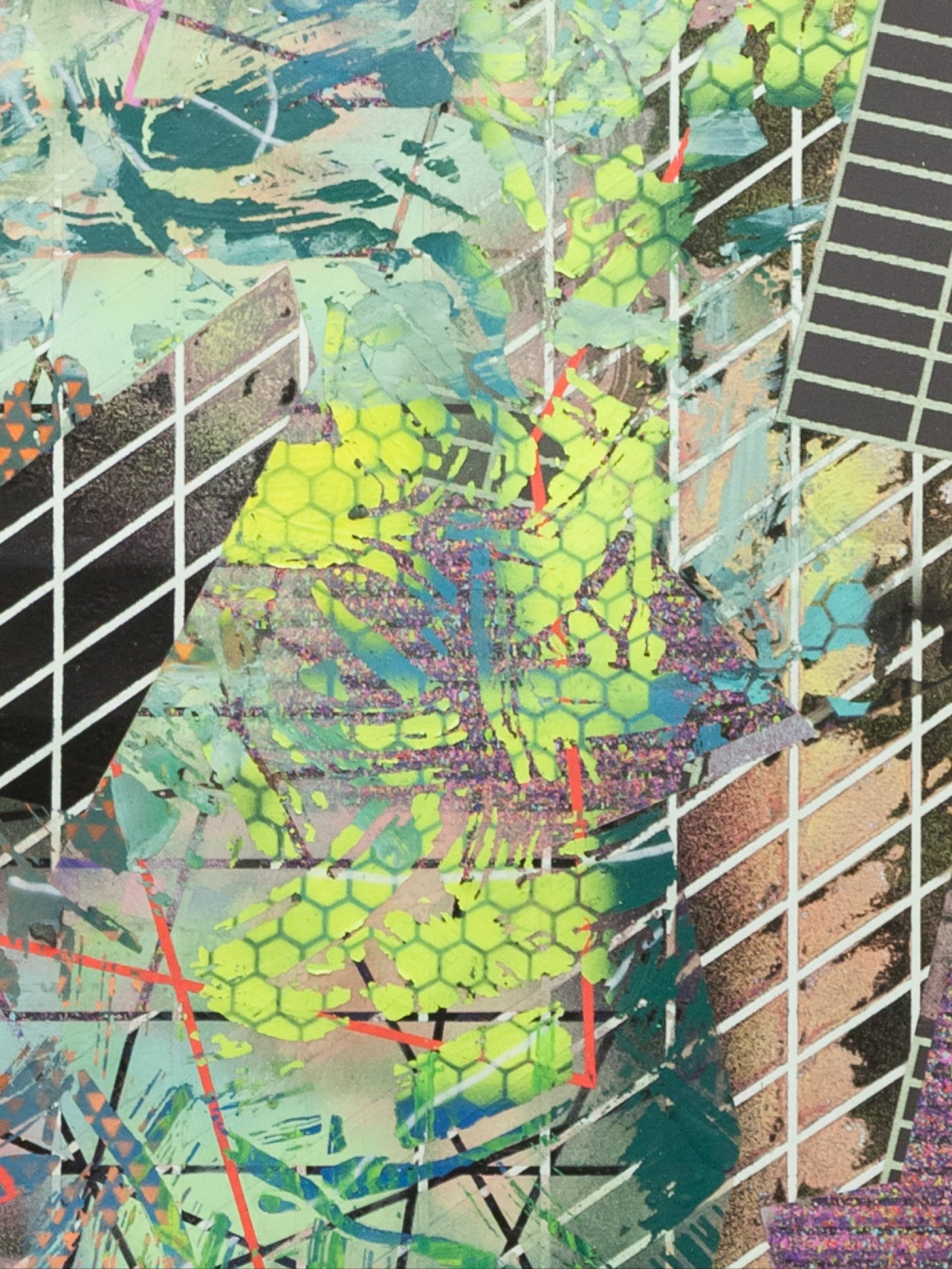
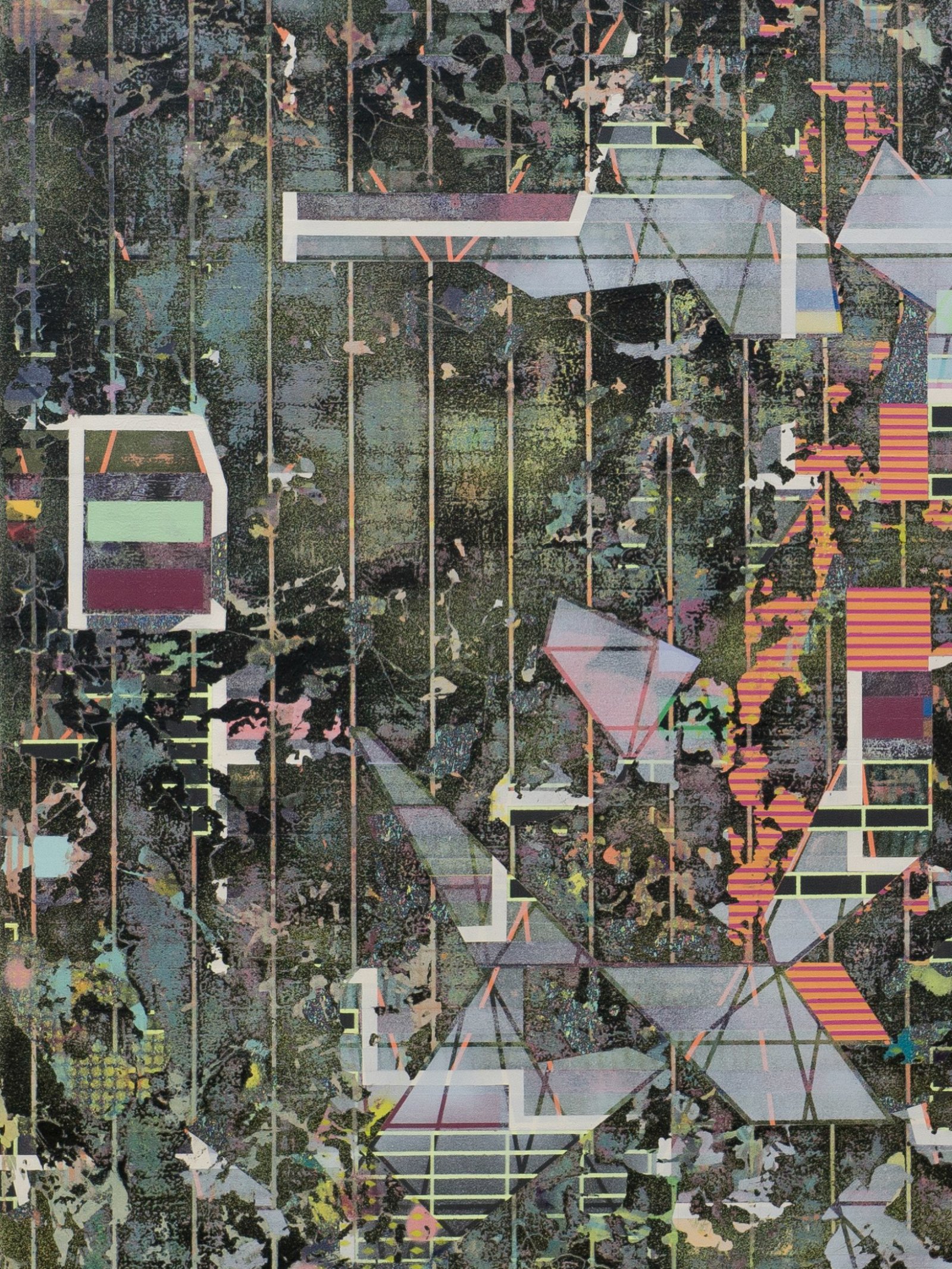
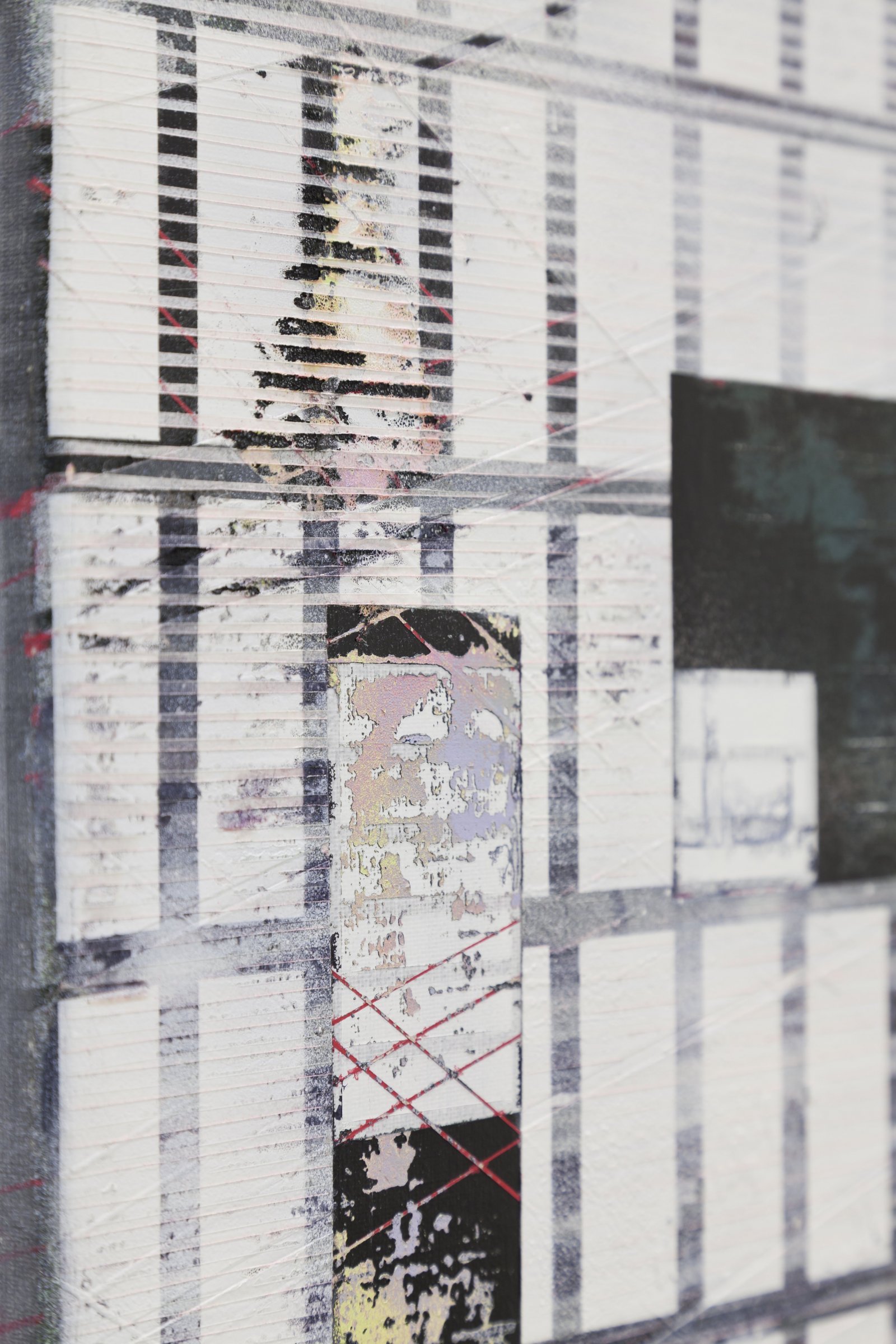
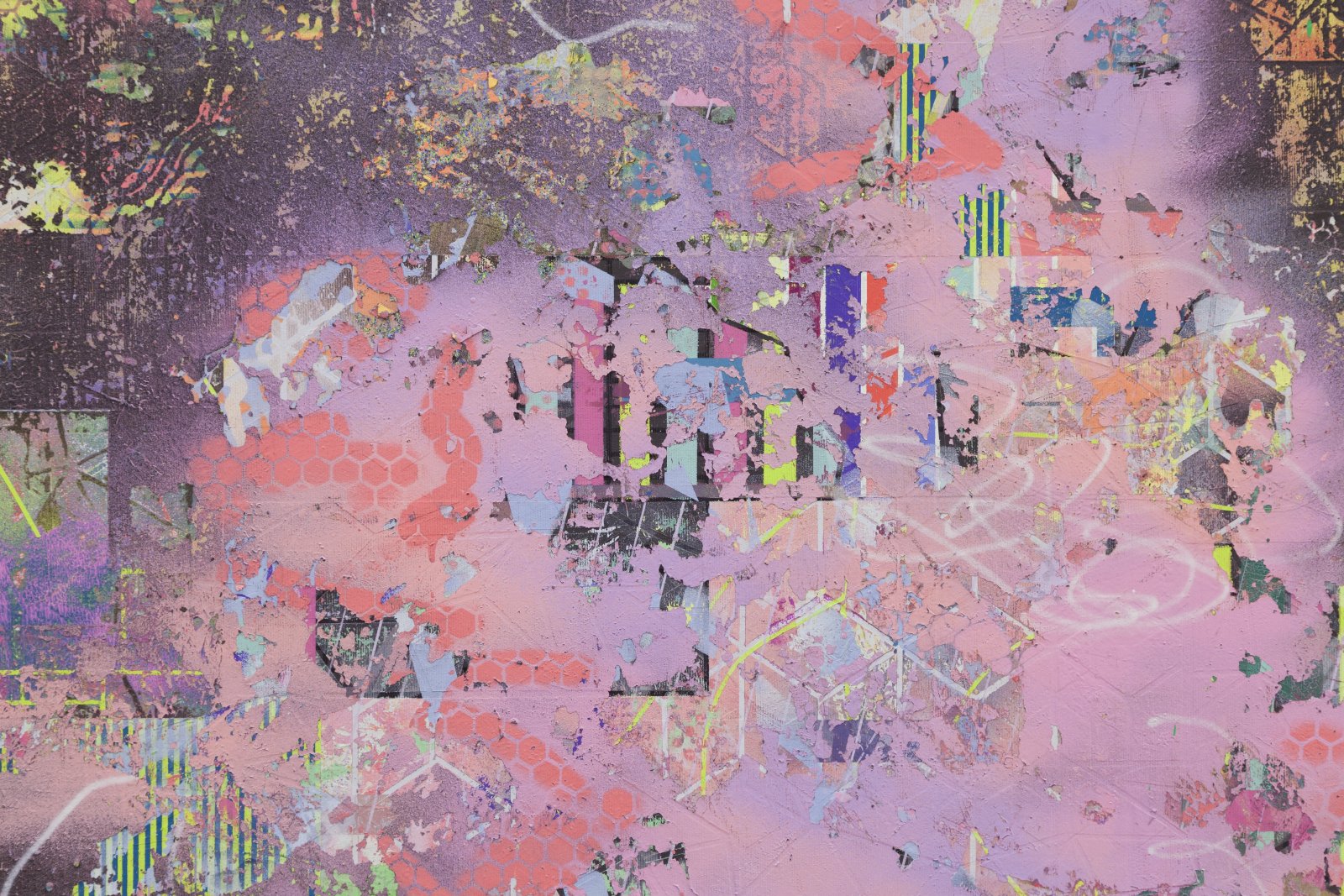
In a long working process I build up thin layers of spray paint, which I then partly remove by tearing off previously applied patterns and areas of tape. Always starting with an orderly grid pattern, the many superimposing surfaces are fragmented and eroded using tape and latex, gradually approximating a state of chaos.
Submitted by vincentkueck
on Sat, 03/14/2020 - 23:39
My paintings are indeed two-dimensional surfaces, much like mirror image. Through the physical process of creation, and by the texture of the paint, the tape and latex, a tactile dimension is added to their appearance. My images are not averse to the touch.
Submitted by vincentkueck
on Sun, 03/15/2020 - 01:11
Alongside those thoughts I understand my paintings to be mind-maps, plans of an interior life of thoughts; the conjoined collapsing of my ego with the world of objects. Through this process of painting I try to resonate with the impossible untouchable layers that are hidden beneath the superficial reflection of my image in the mirror.